Monday, January 2, 2023

Trends and Movements

 This blog is a response to the activity, assigned by Yesha Bhatt. Here are the terms explained in detail and also added some photography and video which was done by us.


1]  Surrealism: 

(Here are some major facts including definitions, which I have taken from ‘The Art Story’.) 

The Surrealists sought to channel the unconscious as a means to unlock the power of the imagination. Disdaining rationalism and literary realism, and powerfully influenced by psychoanalysis, the Surrealists believed the rational mind repressed the power of the imagination, weighing it down with taboos. Influenced also by Karl Marx, they hoped that the psyche had the power to reveal the contradictions in the everyday world and spur revolution. Their emphasis on the power of personal imagination puts them in the tradition of Romanticism, but unlike their forebears, they believed that revelations could be found on the street and in everyday life. The Surrealist impulse to tap the unconscious mind, and their interests in myth and primitivism, went on to shape many later movements, and the style remains influential to this today.


History of Surrealism: 

Surrealism grew out of the Dada movement, which was also in rebellion against middle-class complacency. Artistic influences, however, came from many different sources. The most immediate influence for several of the Surrealists was Giorgio de Chirico, their contemporary who, like them, used bizarre imagery with unsettling juxtapositions (and his Metaphysical Painting movement). They were also drawn to artists from the recent past who were interested in primitivism, the naive, or fantastical imagery, such as Gustave Moreau, Arnold Bocklin, Odilon Redon, and Henri Rousseau. Even artists from as far back as the Renaissance, such as Giuseppe Arcimboldo and Hieronymous Bosch, provided inspiration in so far as these artists were not overly concerned with aesthetic issues involving line and color, but instead felt compelled to create what Surrealists thought of as the "real."

The Surrealist movement began as a literary group strongly allied to Dada, emerging in the wake of the collapse of Dada in Paris, when André Breton's eagerness to bring purpose to Dada clashed with Tristan Tzara's anti-authoritarianism. Breton, who is occasionally described as the 'Pope' of Surrealism, officially founded the movement in 1924 when he wrote "The Surrealist Manifesto." However, the term "surrealism," was first coined in 1917 by Guillaume Apollinaire when he used it in program notes for the ballet Parade, written by Pablo Picasso, Leonide Massine, Jean Cocteau, and Erik Satie. Around the same time that Breton published his inaugural manifesto, the group began publishing the journal La Révolution surréaliste, which was largely focused on writing, but also included art reproductions by artists such as de Chirico, Ernst, André Masson, and Man Ray. Publication continued until 1929.

The Bureau for Surrealist Research or Centrale Surréaliste was also established in Paris in 1924. This was a loosely affiliated group of writers and artists who met and conducted interviews to "gather all the information possible related to forms that might express the unconscious activity of the mind." Headed by Breton, the Bureau created a dual archive: one that collected dream imagery and one that collected material related to social life. At least two people manned the office each day - one to greet visitors and the other to write down the observations and comments of the visitors that then became part of the archive. In January 1925, the Bureau officially published its revolutionary intent which was signed by 27 people, including Breton, Ernst, and Masson.

Surrealism: concepts, styles, and Trends:

Surrealism shared much of the anti-rationalism of Dada, the movement out of which it grew. The original Parisian Surrealists used art as a reprieve from violent political situations and to address the unease they felt about the world's uncertainties. By employing fantasy and dream imagery, artists generated creative works in a variety of media that exposed their inner minds in eccentric, symbolic ways, uncovering anxieties and treating them analytically through visual means.

The Rise and Decline of Surrealism: 

            Though Surrealism originated in France, strains of it can be identified in art throughout the world. Particularly in the 1930s and 1940s, many artists were swept into its orbit as increasing political upheaval and a second global war encouraged fears that human civilization was in a state of crisis and collapse. The emigration of many Surrealists to the Americas during WWII spread their ideas further. Following the war, however, the group's ideas were challenged by the rise of Existentialism, which, while also celebrating individualism, was more rationally based than Surrealism. In the arts, the Abstract Expressionists incorporated Surrealist ideas and usurped their dominance by pioneering new techniques for representing the unconscious. Breton became increasingly interested in revolutionary political activism as the movement's primary goal. The result was the dispersal of the original movement into smaller factions of artists. The Bostonians, such as Roberto Matta, believed that art was inherently political. Others, like Yves Tanguy, Max Ernst, and Dorothea Tanning, remained in America to separate from Breton. Salvador Dalí, likewise, retreated to Spain, believing in the centrality of the individual in art.


Here are some photographs about the surreal activity which is captured by me-


Here is some more pointwise detailed information, click on the link for more information-

Surrealist Paintings: The Art Story

Surrealist Objects and Sculptures: The Art Story

Surrealist Photography: The Art Story

Surrealist Film: The Art Story

Later Developments after Surrealism:

 The Art Story


Dada Movement : 

Dada was an artistic and literary movement that began in Zürich, Switzerland. It arose as a reaction to World War I and the nationalism that many thoughts had led to the war. Influenced by other avant-garde movements - Cubism, Futurism, Constructivism, and Expressionism - its output was wildly diverse, ranging from performance art to poetry, photography, sculpture, painting, and collage. Dada's aesthetic, marked by its mockery of materialistic and nationalistic attitudes, proved a powerful influence on artists in many cities, including Berlin, Hanover, Paris, New York, and Cologne, all of which generated their own groups. The movement dissipated with the establishment of Surrealism, but the ideas it gave rise to have become the cornerstones of various categories of modern and contemporary art- information is taken from ‘The Art Story’.


Central Idea of Dada Movement : 

  • Dada was the direct antecedent to the Conceptual Art movement, where the focus of the artists was not on crafting aesthetically pleasing objects but on making works that often upended bourgeois sensibilities and that generated difficult questions about society, the role of the artist, and the purpose of art.

  • So intent were members of Dada on opposing all norms of bourgeois culture that the group was barely in favor of itself: "Dada is anti-Dada," they often cried. The group's founding in the Cabaret Voltaire in Zürich was appropriate: the Cabaret was named after the 18th-century French satirist, Voltaire, whose novella Candide mocked the idiocies of his society. As Hugo Ball, one of the founders of both Cabaret and Dada wrote, "This is our Candide against the times."

  • Artists like Hans Arp were intent on incorporating chance into the creation of works of art. This went against all norms of traditional art production whereby work was meticulously planned and completed. The introduction of chance was a way for Dadaists to challenge artistic norms and question the role of the artist in the artistic process.

  • Dada artists are known for their use of readymade - everyday objects that could be bought and presented as art with little manipulation by the artist. The use of the readymade forced questions about artistic creativity and the very definition of art and its purpose in society.

History of Dadaism : 

Switzerland was neutral during WWI with limited censorship and it was in Zürich that Hugo Ball and Emmy Hennings founded the Cabaret Voltaire on February 5, 1916, in the backroom of a tavern on Spiegelgasse in a seedy section of the city. To attract other artists and intellectuals, Ball put out a press release that read, "Cabaret Voltaire. Under this name, a group of young artists and writers has formed with the object of becoming a center for artistic entertainment. In principle, the Cabaret will be run by artists, and guest artists will come and give musical performances and readings at the daily meetings. Young artists of Zürich, whatever their tendencies, are invited to come along with suggestions and contributions of all kinds." Those who were present from the beginning in addition to Ball and Hennings were Hans Arp, Tristan Tzara, Marcel Janco, and Richard Huelsenbeck.

In July of that year, the first Dada evening was held at which Ball read the first manifesto. There is little agreement on how the word Dada was invented, but one of the most common origin stories is that Richard Huelsenbeck found the name by plunging a knife at random into a dictionary. The term "dada" is a colloquial French term for a hobbyhorse, yet it also echoes the first words of a child, and these suggestions of childishness and absurdity appealed to the group, who were keen to put a distance between themselves and the sobriety of conventional society. They also appreciated that the word might mean the same (or nothing) in all languages - as the group was avowedly internationalist.

The aim of Dada art and activities was both to help to stop the war and to vent frustration with the nationalist and bourgeois conventions that had led to it. Their anti-authoritarian stance made for a protean movement as they opposed any form of group leadership or guiding ideology.


Beginning of Dada Movement: The Art Story

The Spread of Dada: The Art Story

Dada: Concepts, styles, and Trends: The Art Story

The Later Developments after Dada:  The Art Story

Here are some photographs which is captured by me for the Dadaism activity.


Here I am attaching a video which have done by me and my classmates for the Dadaism activity -


Expressionism :

Expressionism is a modernist movement that first developed around 1905 and continued until around the end of World War II. Expressionist artists sought to represent the world from a subjective perspective by using color and distortion of the subject to evoke moods and achieve an emotional effect. Expressionism was initially very popular as an avant-garde style of painting and expanded to other art forms including poetry, architecture, dance, and music, with influences intermingling at various points in history.

Notable Expressionism Artwork: 
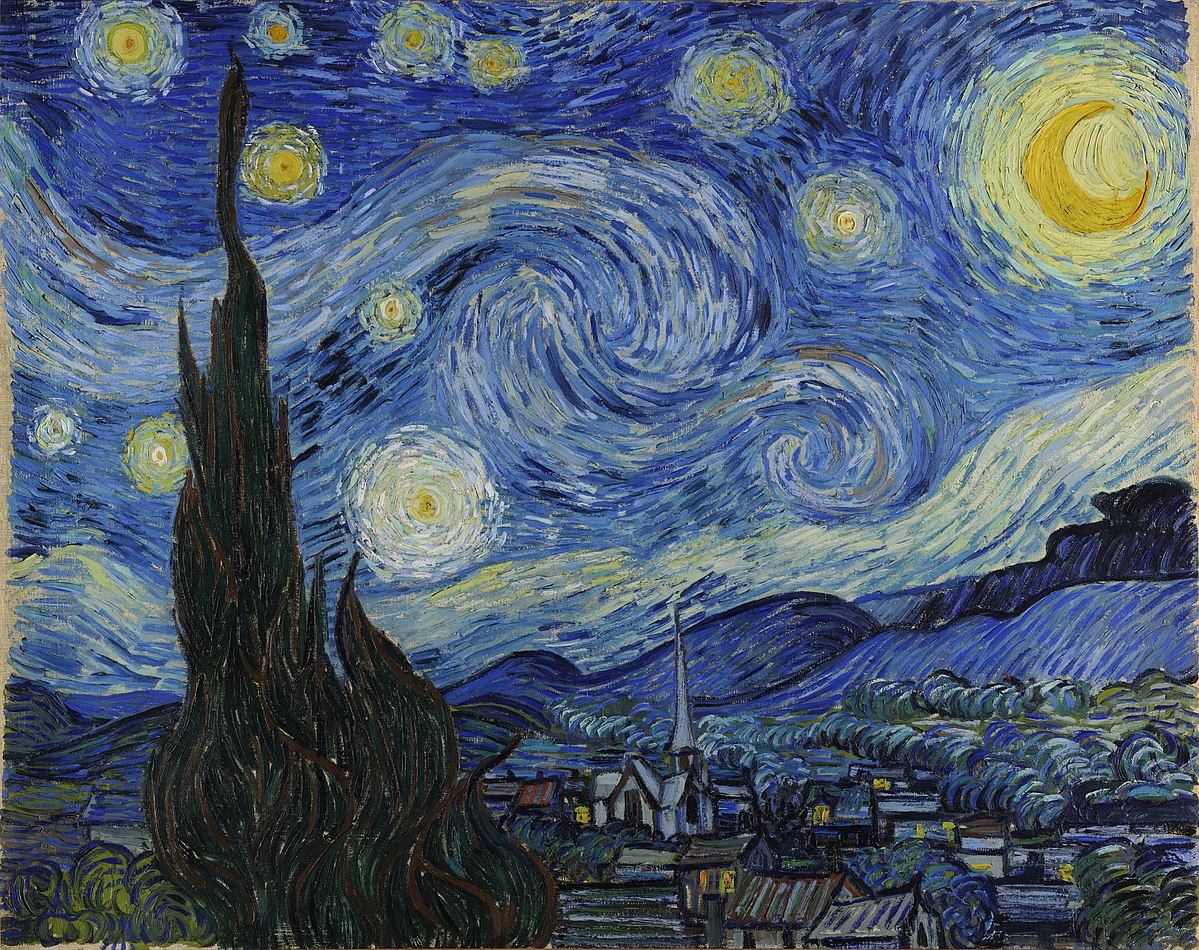
Vincent van Gogh, The Starry Night, 1889, The Museum of Modern Art, New York City https://www.moma.org/collection/works/79802
Vincent van Gogh, The Starry Night, 1889, The Museum of Modern Art, New York City 
 
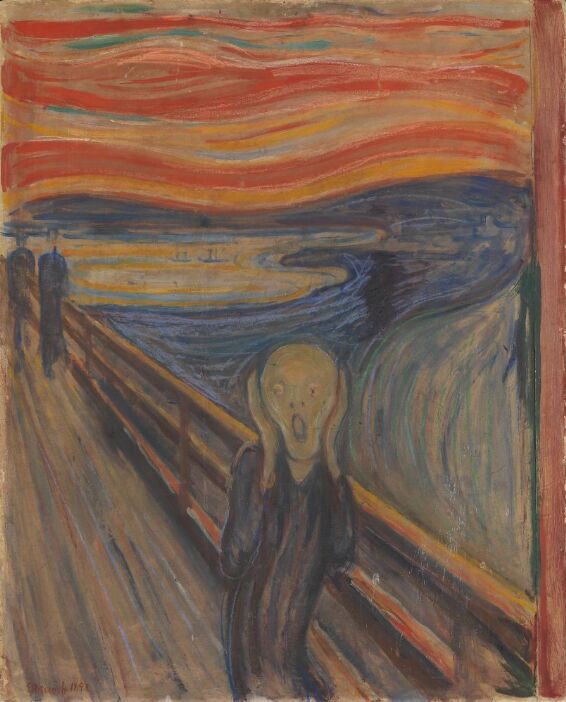
Edvard Munch, The Scream, 1893, National Gallery, Oslo. https://www.nasjonalmuseet.no/en/collection/object/NG.M.00939
Edvard Munch, The Scream, 1893, National Gallery, Oslo. 


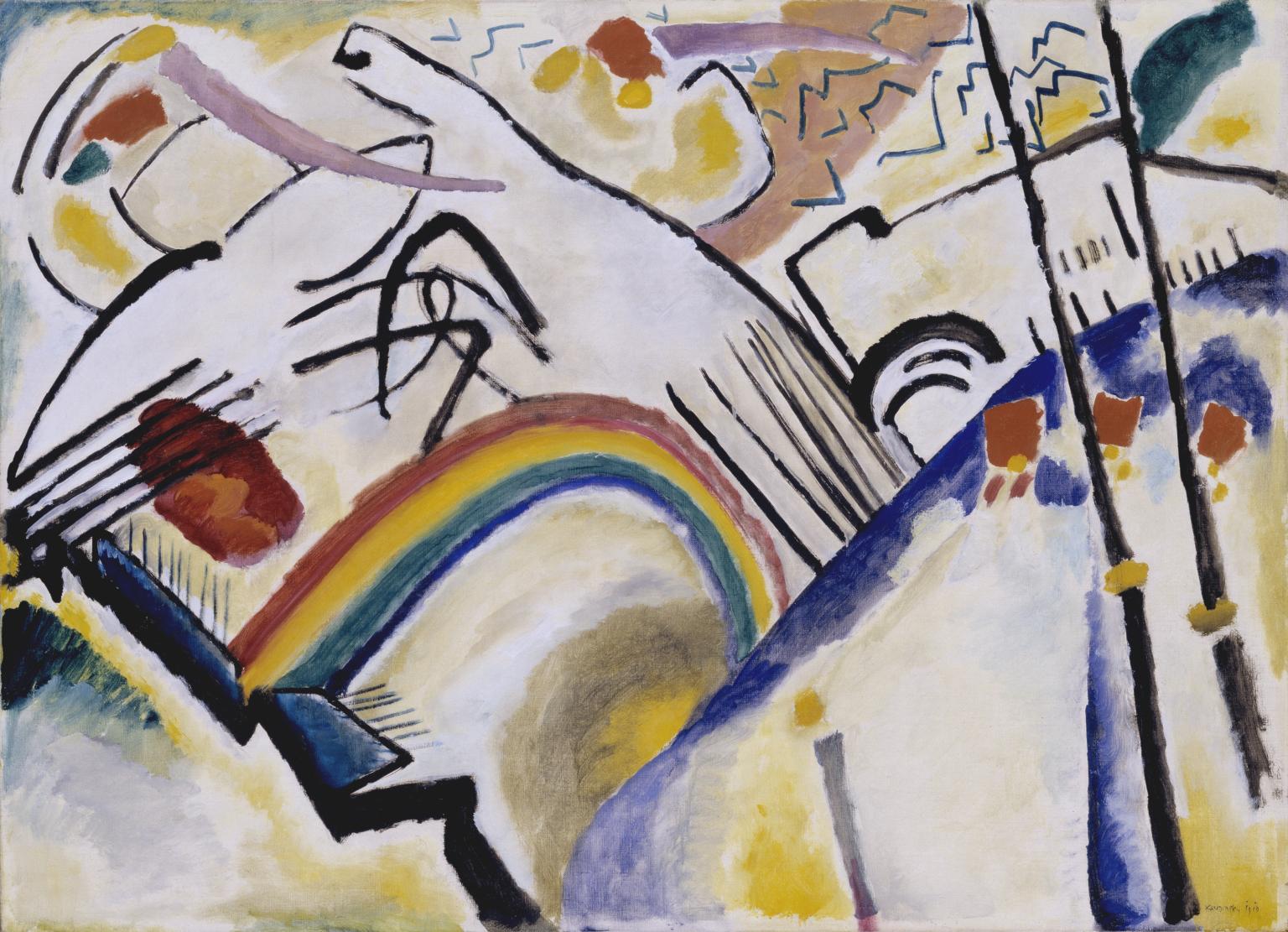
Wassily Kandinsky, Cossacks, 1910-1, Tate, London. https://www.tate.org.uk/art/artworks/kandinsky-cossacks-n04948
Wassily Kandinsky, Cossacks, 1910-1, Tate, London
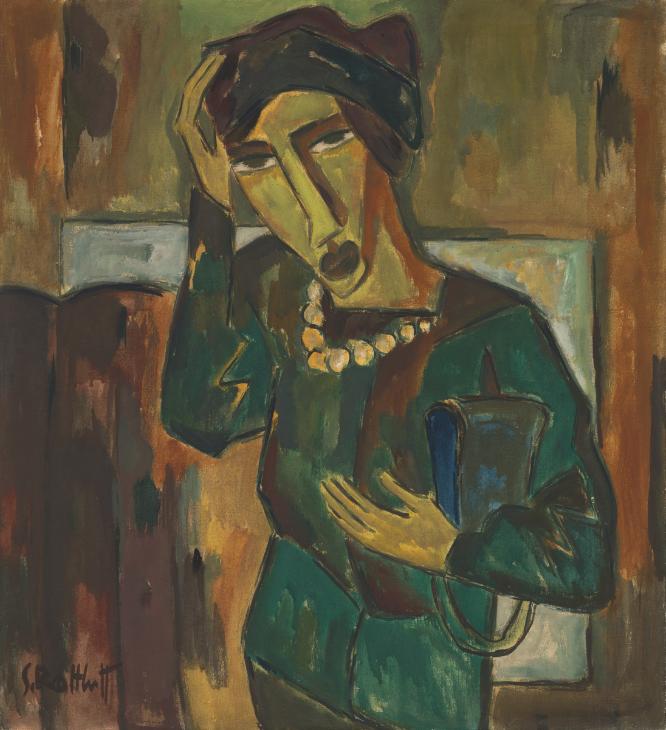
Rottluff, Woman with a Bag, 1915, Tate, London. https://www.tate.org.uk/art/artworks/schmidt-rottluff-woman-with-a-bag-n05953
Rottluff, Woman with a Bag, 1915, Tate, London. 
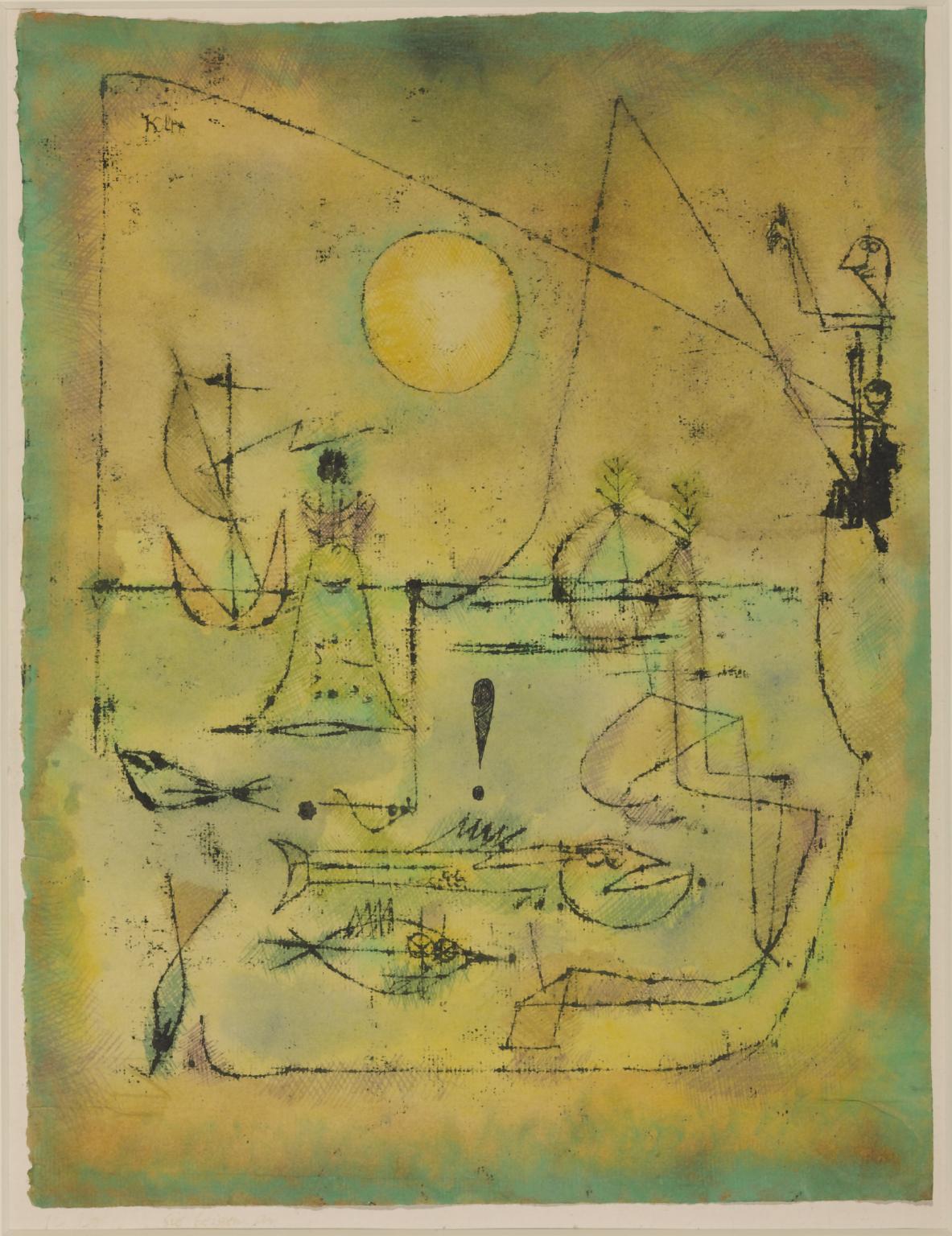
Paul Klee, They’re Biting, 1920, Tate, London. https://www.tate.org.uk/art/artworks/klee-theyre-biting-n05658
Paul Klee, They’re Biting, 1920, Tate, London. 

History of Expressionism :

            Expressionism originated in northern Europe, namely Germany, Austria, France, and Russia, in the years before the First World War. Expressionist art coexisted with other early twentieth-century art movements that also worked to challenge the modern world such as Dadaism, Cubism, Futurism, and Surrealism.

            The origin of the term Expressionism is often debated by art historians, though it was likely coined between 1901 and 1910. Edvard Munch and Vincent van Gogh are widely regarded as being highly influential on the Expressionist movement. Regarded for their work in the 1880s and 1890s, during the post-Impressionist period, van Gogh and Munch’s unique and expressive painting styles used color and line to explore dramatic themes, intense emotions, and various states of mind from a more subjective perspective than the artists and movements that came before them.

            Expressionism distanced itself from art historical tradition by rejecting the reverence for history painting, genre painting, and portraiture held by European art academies. Expressionism did not idealize its subjects, nor did it place them in a hierarchy. All subjects were simply subjects, meant to be reinterpreted through the artist’s subjective perspective. Expressionist artists saw academic art movements as superficial and lacking in spiritual connection.

            Expressionism embraced subjective interpretations of modern life, with little regard for the aesthetically pleasing impressions left by artistic subjects that Impressionism embraced. Expressionism also rejected the portrayal of fleeting scenes and much of the focus on optics that Impressionism valued.Instead, Expressionist painters conveyed powerful emotions, often relying on complementary colors to create vivid, dramatic, and dynamic compositions. This style of artistic expression was more spontaneous than previous movements, lending itself well to conveying feelings of frustration, disillusionment, and cynicism that many felt following World War I. This postwar period led to many artists straying from representations of physical reality, whereas subsequent Expressionist works foregrounded a more instinctive form of expression. for more information, these sites will be helpful-Expressionism Art Movement and The Art Story

Here is a photo of an activity that we have done in classroom along with Yesha ma'am.


Here is my photography for expressionism -


The Wasteland

 "The purpose of literature is to turn blood into ink"

                                                                                    - T.S.Eliot

Introduction:

                    T. S. ELIOT WAS BORN IN ST LOUIS, MISSOURI, on 26 September 1888. He died in London aged seventy-seven. By then, he was the 1948 winner of the Nobel Prize for Literature and, in the same year, the recipient of the Order of Merit, England's most distinguished honour, in the personal gift of the reigning monarch. He was the most influential and authoritative literary arbiter of the twentieth century and a publisher of great distinction at Faber and Faber, where he published W. H. Auden, Louis MacNeice, and Stephen Spender. As the editor of the influential magazine The Criterion, from 1922 until 1939, he published Proust, Gide and Thomas Mann-an indication of his cultural pan- Europeanism as well as his access to the literary firmament. He was a world figure. Late in his career, he was a surprisingly successful poetic dramatist. He was the century's most famous poet- oddly because his prestige was founded on poetry notorious for its difficulty. In 6 March 1950, he was on the cover of Time magazine. On 30 April 1956, Eliot lectured to fourteen thousand people at the baseball stadium in Minneapolis on "The Frontiers of Criticism'. In Raymond Chandler's novel The Long Goodbye (1953), when Amos, the African-American chauffeur of Mrs. Loring, refuses a dollar tip, Philip Marlowe mildly twits his fastidiousness by offering to buy him the poems of T. S. Eliot; 'He said he already had them.' A hundred pages on, Marlowe and Amos have a plausible discussion-Amos is a graduate of Howard University-about "The Love Song of J. Alfred Prufrock'. (They agree 'that the guy didn't know very much about women'.)


                Eliot's detractors often insinuate that this eminence was achieved by feline caution, literary politicking, calculation, a shrewd assessment of the literary marketplace, a quiet but inexorable campaign of ruthless self-advancement. I think it is a matter of literary merit rather than manipulation of opinion. In fact, Imagination of the Heart, Theresa Whistler's biography of Walter de la Mare, demonstrates that 1922, the agreed date for the conclusive advent of modernism-with the publication of Joyce's Ulysses, Flint's The Waste Land and Wallace Stevene's Harmeonium seemed much less conclusive to de la Mare, J. C. Squire, and other tenacious neo-Georgians, 'also-rans' who had their own platforms including The London Mercury and the Weekly Westminster, to which the young Graham Greene contributed. It wasn't a question of capturing the sole radio station. The strategic battles were still being 'fought' in the 1950s. Walter de la Mare thought the selection of Eliot as the only twentieth-century English poet at the Festival of Britain in 1953 was invidious and wrote to Eliot asking him to withdraw.


                Despite this latter-day celebrity, for much of his life, Eliot's fame was restricted to literature. He was a private person. In his newspaper paper column, Gilbert Harding, a once-famous, now forgotten, British broadcasting celebrity, recounted his embarrassment at being pointed out on the London underground while Eliot, 'the greatest poet of the century', was ignored, unrecognised in the corner of the same compartment.


                Eliot's life, like the lives of many writers who spend their time at their desks, was apparently uneventful compared to, say, Ernest Hemingway's blood-bolstered, flashbulb-tormented exploits. In 'To Criticise the Critic' (1961), he described himself as 'the mild-mannered man safely entrenched behind his typewriter'. And it is a theme of this study that the Buried Life, the idea of a life not fully lived, is the central, animating idea of Eliot's poetry.


                However, Eliot's own life is full of quiet drama, even of recklessness. On the one hand, there is the assiduous man of letters, indefatigably reviewing, editing, and giving lectures. On the other hand, there is the poet who renounced a promising career as a philosopher in American academe for an uncertain literary life in a foreign country, the poet who married, within weeks of meeting her, Vivien Haigh-Wood. Though initially Vivien was a valued, even essential literary confrere and a loved wife-'I have felt happier, these few days, than ever in my life', Eliot writes to Bertrand Russell on 14 January 1916-the marriage was not a success. On 10 Janu- ary 1916, Eliot writes to Conrad Aiken that financial worries and concern over Vivien's poor health had stopped him writing: Yet, 'I am having a wonderful time nevertheless. I have lived through material for a score of long poems in the last six months. An en- tirely different life from that I looked forward to two years ago. Cambridge [Mass.] seems to me a dull nightmare now...'. Vivien committed adultery with Bertrand Russell, Eliot's ex-teacher and mentor. Eliot was legally separated from her in 1933. Gradually, she went mad and in 1938 was committed by her brother Maurice. She died in a private mental hospital in Finsbury Park, London, on 23 January 1947.


            In June 1927, Eliot was received into the Church of England, and in November became a naturalised British citizen. Virginia Woolf writes of Eliot 'in his four piece suit-repressed, reserved, buttoned-up. If we concentrate too much on the Lloyds banker in his pin-striped trousers, the London publisher with his bowler hat and rolled umbrella, and Eliot's own ironic self-portrait as the circumspect pedant-Restricted to What Precisely / And If and Perhaps and But'-we are likely to overlook the man whose religious conversion first announced itself in the Vatican when Eliot fell to his knees in front of Michelangelo's Pietà to the amazement of his brother Henry Ware Eliot. Eliot isn't the dry stick of his self-caricature. This is Robert Lowell describing Eliot dancing with Valerie, his new bride and second wife, forty years younger than himself, and married in secret at the age of sixty-nine: 'they danced so dashingly at the Charles River boatclub brawl that he was called "Elbows Eliot".


               Given that the main events of Eliot's life are so sensational, even lurid, it may seem odd that the central focus of his oeuvre should concentrate on the life not fully lived, 'buried', avoided, side- stepped. It is conceivable, though, that these dramatic decisions in Eliot's life were provoked by the very fear of not living fully-of opting for insurance rather than risk. The theme itself comes from literature, not 'life'-from Henry James in the first instance, but fed by the main current of nineteenth-century literature. We writers frequently inherit our themes from our most admired predecessors.It is they who set the agenda. It is we who continue it, who develop it. It is important to realize that, for writers, the fully lived life also means the interior life, the mental life. Grey matter acting on reading matter is a matter of passion, too.


                This contradiction between the risks Eliot took in his own life and his dominant theme of debilitating caution makes it difficult to equate biographical events with the poetry. Unlike Sylvia Plath-whose poetry cannot be understood without the prior knowledge that her marriage to Ted Hughes failed and that she was a suicide risk-Eliot's poetry is committed to impersonality. The life hardly helps us at all as readers. In 'The Frontiers of Criticism' (1961), Eliot lays out this position:


"For myself, I can only say that a knowledge of the springs that released a poem is not necessarily a help towards understanding the poem: too much information about the origins of the poem may even break my contact with it. I feel no need for any light upon [Wordsworth's] Lucy poems beyond the radiance shed by the poems themselves"


The Waste Land :

'The Waste Land', a Modern epic, written by Thomas Eliot. It was published in 1922. It can be read in 5 parts. such as:

1] The Burial Of the Dead

2] A Game Of Chess

3] The Fire Sermon

4] Death By Water 

5] What The Thunder Said.

Poem starts with these lines:-

            This means, "I saw with my own eyes the Sibyl at Cumae hanging in a jar / cage, and when the boys said to her, Sibyl, what do you want? she replied "I want to die." So, as we can see, the poem started with the Myth of Sibyl. Mainly the poem deals with the theme of 'Spiritual Degradation' and 'Sexual Perversion' through these different themes and major events throughout the poem, poem becomes more intresting and makes sense. 

1) What are your views on the following image after reading 'The Waste Land'? Do you think that Eliot is regressive as compared to Nietzche's views? or Has Eliot achieved universality of thought by recalling mytho-historical answer to the contemporary malaise?


From my point of view, I won't consider Eliot as regressive at all. Infect he insipred people to not to repeat same mistakes which has done by their forefathers, with theuse of mythical and historical contexts. If we compare Eliot to Nietzsche then we have to understand what both of the thinkers say.


Nietzsche denied the fundamental rationality of the universe and called Christian morality, ‘the slave morality’. said that "God is dead", thus he believed in "Will to Power", that the stronger people will rule. He gave his theory of 'Ubermensch' (Overhuman/ Superhuman or Superman) , an upgraded version of man who will be man but more than man. That was only theory and his somewhat futuristic imagery.

In contrast Eliot speaks about past mistakes in order to achieve better results in present and in future. He is not regressive but he seeks progress with knowledge of past and present understanding. He looks backward in Upanishads, Buddhism and in Christianity only to go forward. He wants to point out past mistakes that have repeatedly happened throughout history and by identifying it he does not want to repeat it. As the saying goes,

Those who cannot remember the past are condemned to repeat it.” – George Santayana

2) Prior to the speech, Gustaf Hellström of the Swedish Academy made these remarks:
What are your views regarding these comments? Is it true that giving free vent to the repressed 'primitive instinct' lead us to happy and satisfied life? or do you agree with Eliot's view that 'salvation of man lies in the preservation of the cultural tradition'?

            Personally, I don't think that giving free vent to the repressed 'primitive instinct' leads us to a happy and satisfied life as everyone has their own way of living life and that can be harmful at Grand level. everyone ha sdifferent standards and definitation of happiness. but it depends on morality. one thing that is making one happy, it may affect someone differently.
                                                    
At some points of life one can well observe the tradition, and relegious books and whole religion itself flexible, the way it changes definitions as per timings. We don't have to cling into our tradition and culture but from time to time also have to modify and make changes that can be helpful and appropriate to time and future.

3) Write about allusions to the Indian thoughts in 'The Waste Land'. (Where, How and Why are the Indian thoughts referred?)


Poem 'The Wasteland' contains various images of Mythological and Literary allusions from various countries and languages. Throughout the four parts of the poem Eliot describes the themes of Sexual perversion and Spiritual degradation and the malaise of modern world, to seek redemption and answers he comes to the Knowledge of 'Upanishad' in the fifth part of the poem 'What the Thunder Said'.


Ganga was sunken, and the limp leaves

Waited for rain, while the black clouds

Gathered far distant, over Himavant.

The jungle crouched, humped in silence.

Then spoke the thunder


In this part poem refers to the divine message of Brahma the Prajapati, the father of all three beings men, demons and gods.


Da- the message from the sky and it's interpretation in three Varieties


Datta : to give, not only charity but giving oneself for some noble cause. It's not mere mechanical activity but to devote oneself for noble deeds and for that he has given an example of Karna, Bhamasha.

Dayadhvam: Sympathy, empathise yourself with the

sorrows and suffering of others, come out of your isolation and live into others.

Damyatah : Self Control, control over one’s passions and

desires.


Poem ends with the line,

Shantih shantih shantih"


The poem ends with the three repetition of the word "Shantih" that comes from Upanishad' and suggests the meaning 'the peace which passeth understanding' through this line poet wants to achieve and share the peace to all mankind.

4) Is it possible to read 'The Waste Land' as a Pandemic Poem?

            Because of the great influence of world war 1 and 2 historians used to read every literature of those days with the glasses of World War but, huge thanks to Elizabeth Outka we got to see the hidden side of the poem that reflects the Influenza Flu Pandemic as the poem is Collage of many images. The Spanish Flu that was acquired in the same era of time in 1918 can also be part of the reading of the poem 'The Wasteland'.


The poet was also caught by the Flu in its second wave in 1918, the autobiography elements are also seen in the poem, one wasteland of pandemic is also seems to be created in the poem.


Gunahon Ka Devta Book Review

Hello readers, it's me, Avani Jani — back after almost a year, with a new post from my review series "ज़ुबान-ए-क़िताब" Recentl...